
Rocky River Neighbors and Block Sources
A Rocky River block search has a narrow, useful scope: identify nearby parcels, then verify each parcel one at a time. The property and map tools establish geography. The Recorder can establish parties to a recorded instrument. City files may add a public project chronology. Historical directories can identify a listed household or business in a specific edition, while the voter tool is for individual verification. Those sources should never be combined into a claim that everyone on a block is publicly listed.
| Source | What It Shows About a Block | Access |
|---|---|---|
| MyPlace and Fiscal GIS Hub | A selected parcel and its immediately adjoining parcel context. | Address, owner, or parcel query, then map browse and source-office verification. |
| Recorder documents | Recorded parties and a deed chain for one adjacent parcel. | Official Records Search or Recorder counter. |
| City permits and board records | Publicly releasable project, variance, or board chronology for a property. | CitizenServe, department, Council or board archives, or a City request. |
| City and criss-cross directories | Historical listed people or businesses at an address in one edition. | Cleveland Public Library, Rocky River Public Library, and microfilm routes. |
| Voter lookup | Individual registration verification where public. | Ohio Voter Lookup or Board of Elections, subject to protections. |
| Community organizations | Public contact and meeting context when a group publishes it. | City civic-organizations directory and each group’s own public information. |
Owner and person at an address are separate facts. A MyPlace card can identify an owner or tax correspondence clue, but it does not establish who lives there. The same caution applies when an instrument, old directory, or board file carries a name. Record the source date and property identifier before drawing a conclusion about Rocky River neighbors.
Map Rocky River Neighbor Parcels
The County supports a practical map method, but not a radius-based neighbor search. Start with the known parcel in Cuyahoga MyPlace, then open the Fiscal GIS Hub or the available map link. Visually identify only parcels that directly adjoin the selected land or share its street frontage. If the application exposes a parcel record link, use it for that specific property. The reviewed official sources did not document a public buffer, radius, select, or measure feature, so none should be assumed.
- Find the known Rocky River address in MyPlace by address, owner name, or parcel number, and copy the selected parcel’s situs and legal land clues.
- Use the GIS or map route to confirm the parcel’s location, adjacent boundaries, and frontage. A map display is geographic context only.
- Choose one immediately adjoining parcel and open its property record only when a record link is exposed. Repeat separately for every property.
- For a parcel that matters to the question, verify its owner or recorded party through the property record and a matching Recorder instrument.
- Stop at the verified properties. Nearby parcels are not evidence of a relationship, shared household, or current personal connection.
The County’s Property Alert service is shown below. It can notify a user when a watched name or entity appears in a real-property filing, but the County says it is not a guarantee of detection or title validity.
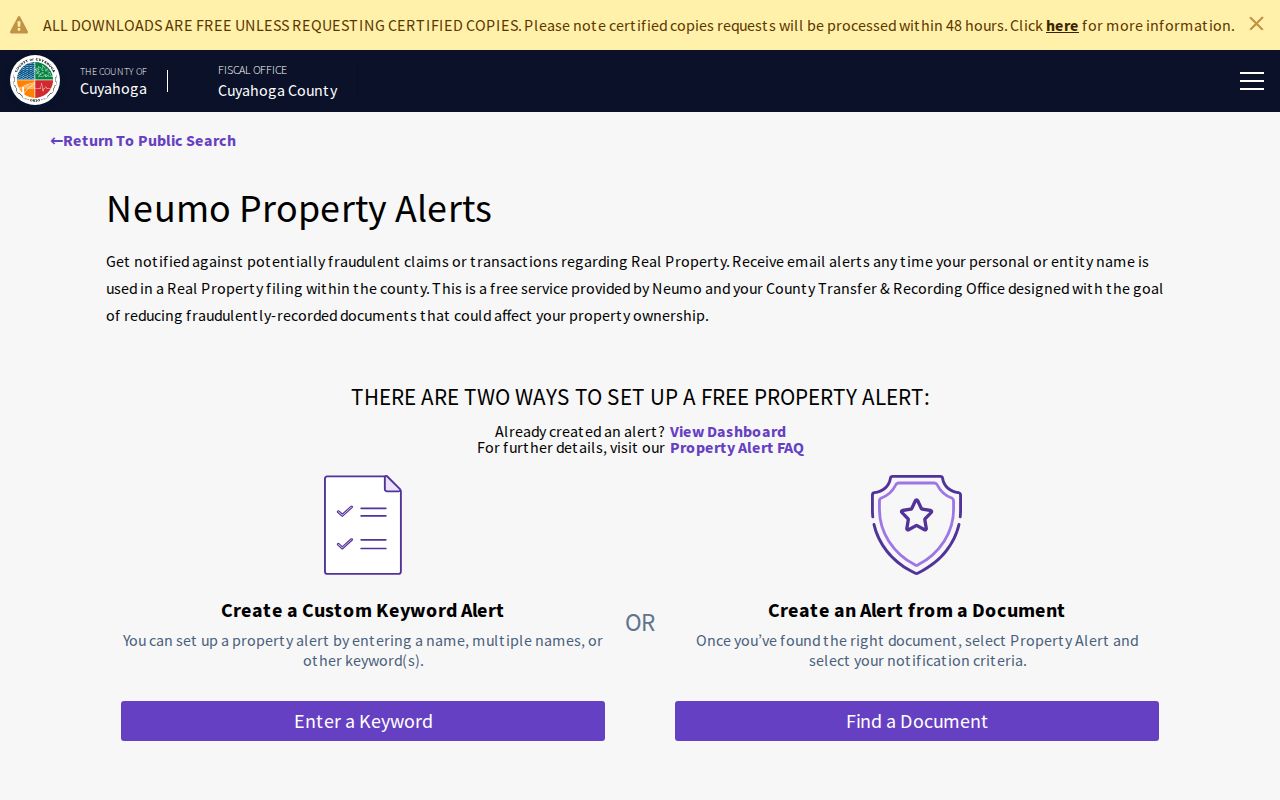
For a whole named road rather than the immediate block, the address chain belongs in the Rocky River Street Directory.
Rocky River Records for Adjacent Parcels
Each adjoining Rocky River parcel deserves its own document check. The Recorder index accepts grantor or grantee names, subdivision, document type, document number, recorded-date range, and parcel-formatted ID. Search the party or parcel clues from the selected property record, then compare the instrument’s document number, date, and legal or subdivision wording. A recorded party is a party to that filing. It is not a declaration of current residence.
City evidence has a separate role. The Building Department’s CitizenServe and City Hall routes can help locate an existing releasable permit or project file by address and approximate period. Council, Planning, BZA, and design-board materials can add a public record of a proposal or hearing. A later permit can show a dated change or process. It does not establish original construction or every person connected with the property.
Note: Keep a separate note for every parcel, including its parcel number, address form, recorded document number, and the date each source was checked.
Rocky River Voter Lookup Is Individual
Ohio’s public voter lookup is for checking an individual record, not for browsing a Rocky River block. The state form uses First Name, Last Name, and County, then asks the user to select a street name. Cuyahoga County’s information page uses last name and date of birth. Those paths can help verify a particular record where public, but the reviewed official tool did not provide an open block roster. The Board of Elections, not a map display, controls the current operational route for any existing list product or public-record request.
Ohio voter records carry important limits. Safe at Home participants may have confidential registration that keeps home address, precinct, and county from public view. State rules also exclude sensitive voter and motor-vehicle fields, including identifying numbers and protected contact data. Ohio’s online-public-record redaction process under R.C. 149.45 is custodian-specific and requires a precise record location. A missing result may be protected, stale, absent, or held by another office. It is never a reason to reconstruct a protected address.
Rocky River Civic Organizations as Contacts
The City’s Civic Organizations directory is a community-contact source. It identifies public-facing groups and directs readers to their own public contact information. It is not evidence that a person belongs to a group, lives nearby, or has a relationship with other Rocky River neighbors. The categories below are limited to organizations named by that City directory.
Arts and culture
Beck Center, CityMusic Cleveland, College Club West, and Chamber Music Society appear as public community contacts.
Service and civic life
Kiwanis, League of Women Voters Greater Cleveland, Rocky River Assistance Program, Lakewood/Rocky River Rotary, and West Shore Meals on Wheels are listed public-facing organizations.
Library and history
Friends of Rocky River Public Library, the Rocky River Historical Society, and the RRPL Foundation provide institution-level community context.
Garden and watershed
Beach Cliff Garden Club, Community Garden, Green Team, and Rocky River Watershed Council are listed as public contacts.
The City civic-organizations directory is the source shown below. No authoritative current neighborhood-association, HOA, block-watch, or member roster was found in the reviewed official research. For a local question, use municipal meeting records, RRHS or RRPL history context, and property evidence instead of inferring membership.
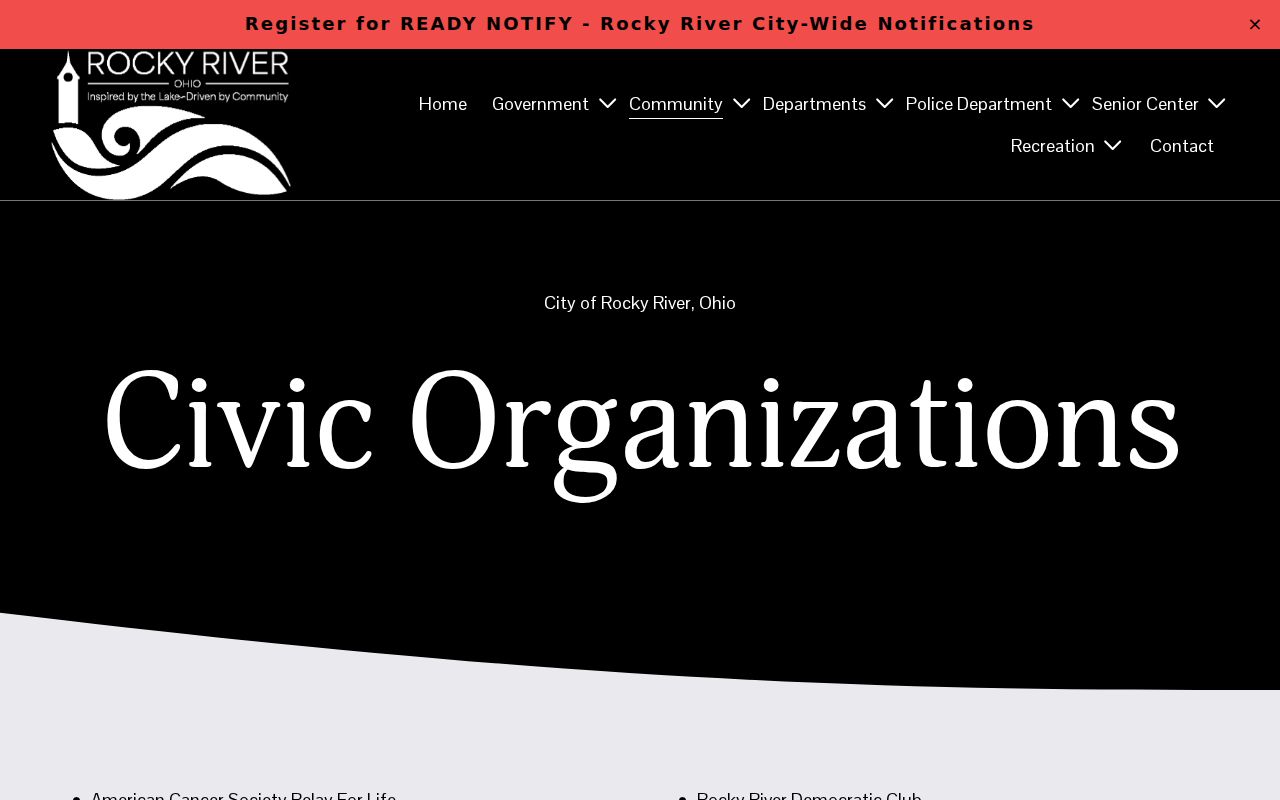
Public group contacts can help a reader understand community resources, but their directories do not turn into records of residents or households.
Rocky River Owners Are Not Households
A parcel system is often the fastest way to orient a Rocky River neighbor search, yet it has a strict boundary. MyPlace can begin with an address, owner name, or parcel number and can provide tax-year context after a property is selected. An owner may be an individual, trust, estate, or business. A mailing address can differ from the situs address because it is for tax correspondence. Neither detail proves who is present at the property.
Historic criss-cross and city directories have a similarly narrow value. They can preserve an address-arranged listing for a particular edition and may help compare a known property across time. They do not prove a current household. Keep each source in its own period and identify a name as a listed person, recorded party, or owner instead of treating it as a general neighbor label.
Rocky River Police and City Records
Rocky River Police public records provide incident and traffic-report routes, with a records-clerk alternative at 440-331-1234 during business hours. These are report-access channels, not a block directory. If a public record is sought, use a focused request with an existing date, address, incident number, or report identifier and respect exemptions, safety limits, and the agency’s release rules.
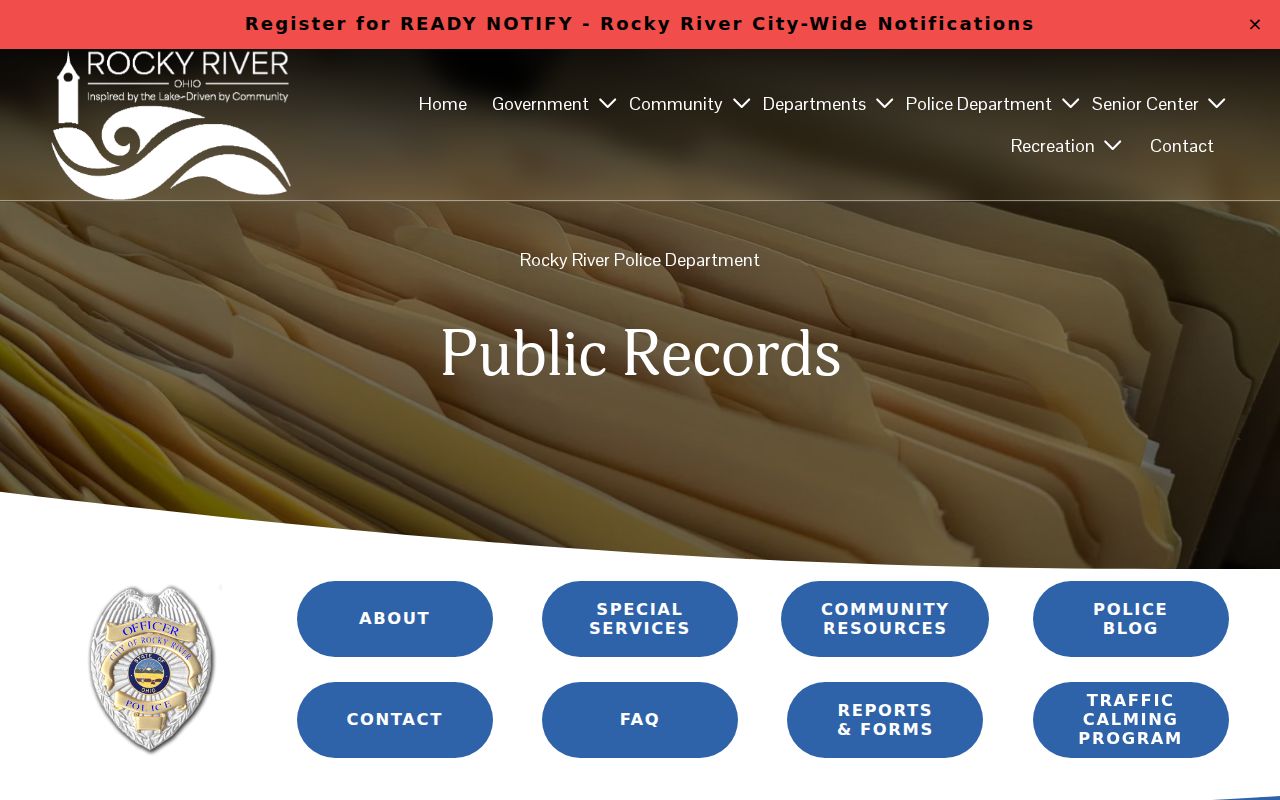
The City’s police page connects a report request with the responsible office, rather than encouraging guesses about a person from a nearby address.
City Council archives and library copies of recent minutes provide another civic record layer. They can identify a public agenda item, hearing, address, or project subject, but they are not a substitute for parcel verification or a list of Rocky River neighbors.
Official Records and Commercial Neighbor Tools
Official sources and commercial neighbor listings answer different questions. A public parcel record, Recorder instrument, or City file has a named custodian and a specific record date. Commercial services commonly compile material of varying age and quality, may combine people with similar names, and can omit protections or correction context. Use a commercial result only as an unverified prompt, then preserve the official parcel, document, case, or record date needed for custodian verification.
| Official Rocky River record path | Commercial neighbor listing category |
|---|---|
| Property and map records establish a selected parcel and its geographic context. | May group names and addresses without showing the underlying parcel or source date. |
| Recorder documents identify a dated party role for a particular instrument. | May carry stale or conflated personal information. |
| City, library, and voter channels have defined access limits and custodians. | Does not replace a custodian’s record, correction path, or protection decision. |
Privacy Limits for Rocky River Neighbors
Parcel adjacency is not a relationship map. It cannot identify household membership, private utility records, delivery information, or protected locations. Public-record access under Ohio law has exemptions and program-specific protections, including Safe at Home. A person absent from a public source may be protected or simply not represented in that source. Respect that uncertainty and do not combine fragments from different systems to expose private facts.
Rocky River neighbors can be researched for personal, lawful property curiosity, family history, community context, or a focused public-record question. The proper response to an uncertain result is to check the source office or leave it unresolved, not to broaden the search into someone’s private life.
Lawful use. Use Rocky River neighbor information for lawful personal research and civic context only. Do not use an address, parcel, or public record to watch, threaten, stalk, harass, or intimidate anyone.