
Rocky River Previous Residents by Era
Previous residents are best traced by separating ownership evidence from household evidence. A deed may identify people involved in a transfer, while an address directory can name a listed person in one edition. Cuyahoga County has a long recorded-document trail, but the older layers are divided among the Recorder, County Archives, library collections, and map room. The table keeps those channels in their actual eras. Gaps matter: a missing name in one source may mean the edition, map year, or record type does not cover the question.
| Source | Years It Covers | Where Held | What It Shows |
|---|---|---|---|
| Recorder recorded documents | 1810-present | Official Records Search; Recorder counter | Instrument parties, recording date, document number, parcel or subdivision clues. |
| Historical tax records | 1819-1986 | Cuyahoga County Archives, by appointment | Owner and tax-duplicate research, including valuation-change clues. |
| Suburb atlases | 1852, 1874, 1892, 1903 | County Archives | Historic county-suburb map context. |
| Suburb tax maps | 1860, 1870, 1880, 1890 | County Archives | Owner listings and structures in the map year. |
| Original maps | circa 1860-1945 | County Archives | Map volumes and building outlines where shown. |
| Later maps | circa 1945-present | Fiscal Office Map Room, 216-443-7020 | The later county map route. |
| Rocky River city directories | 1925-1932; 1934-1935 | Allen County Public Library collection | Names and addresses in verified editions. |
| Rocky River Directory | 1954-1955 | Cleveland Public Library | A standalone local directory edition. |
| Federal census | Through 1950 public release | National Archives partners and repositories | Household composition in released schedules. |
Start each Rocky River address trail with the most recent confirmed parcel, then move into the appropriate time layer. The County Archives specifically warns that street names, dimensions, and property descriptions can change. Preserve the old and current address, parcel number, legal description, subdivision clue, and nearby landmark instead of treating a similar street number as a match.
Rocky River Records for a Deed Chain
Use Cuyahoga MyPlace to locate the current address, parcel number, and legal-description clues. MyPlace begins with address, owner name, or parcel number, and it is a discovery source rather than the controlling record. Take the current owner or grantee into the Recorder’s 1810-present index, locate the purchase instrument, and use the seller on that instrument to step farther back. A result should be accepted only when the legal description, parcel, or subdivision also fits the same land.
The County’s Recorded Documents guidance introduces the Recorder channel shown here. An online hit does not guarantee a usable image for every document, so compare the index with the underlying instrument when available and use the Recorder counter or Archives when the web result is incomplete.
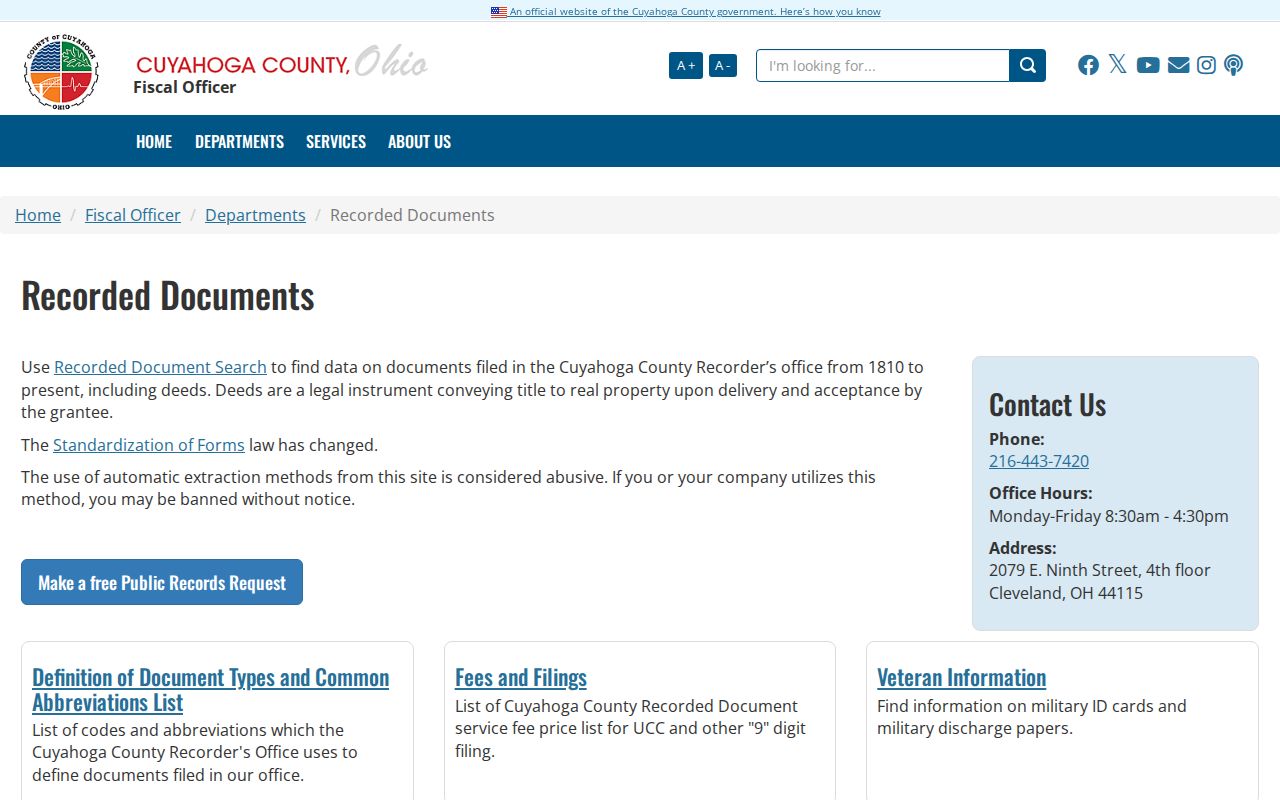
The Recorder route ties a dated document to a particular Rocky River parcel, which is more reliable than carrying a surname backward without land clues.
- Locate the present property in MyPlace and copy the address, parcel number, legal description, and any subdivision wording exactly as shown.
- Find the current grantee’s purchase in the Official Records Search. Save the document number, recorded date, party roles, and matching land clues.
- Treat that document’s seller, the grantor, as the next name to investigate. Search the seller as a grantee within an earlier recorded-date range.
- Confirm the earlier acquisition through the same parcel, legal description, or subdivision rather than a name alone. Repeat the sequence one conveyance at a time.
- When the index, image, or land wording is unclear, ask the Recorder or Archives for the available record and retain the uncertainty in the research notes.
- Grantor
- The party transferring an interest in a recorded instrument.
- Grantee
- The party receiving that interest. In a backward search, a grantor in one deed may be the grantee in an earlier purchase.
- Chain of title
- The ordered set of transfers for the same parcel or legal description, checked instrument by instrument.
- Legal description
- The lot, subdivision, block, or other recorded land wording. It often remains a better link than a street address that has changed form.
Note: A recorded party establishes a role in a land transaction, not proof that the party lived at the Rocky River address.
Rocky River Address Maps Before Today
For a period before the modern parcel screen, the Cuyahoga County Archives is the central Rocky River records stop. Its property-research instructions point to tax records from 1819 through 1986, original map volumes from about 1860 through 1945, and the suburb atlases and tax maps listed above. Map evidence can connect an owner name to a place and can show a structure during the map’s coverage. It should be compared with tax duplicates and a deed trail, not treated as a complete list of past residents.
The County Archives property-research page describes the appointment-based route for these older Rocky River address materials.
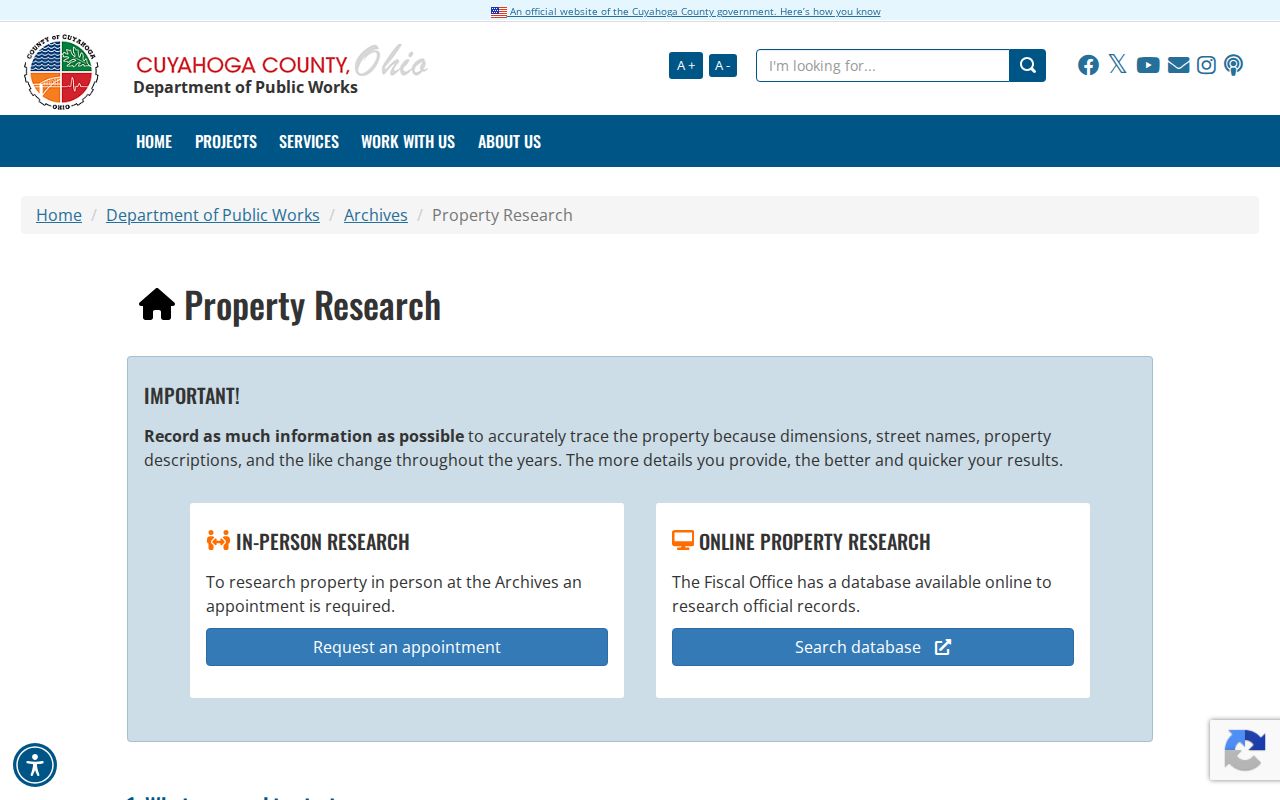
Its era boundaries make a practical handoff: use Archives sources for early maps and tax work, then use the Fiscal Office Map Room for the later map period.
Rocky River’s place labels also changed as the community moved from hamlet to village to city. That history is a reason to retain the exact spelling used by the source. If an atlas gives an earlier road form or a landmark, use it with the legal description and parcel history when reconnecting the property to a modern record.
Rocky River Previous Residents in Directories
Directories and census schedules add the household layer that deeds cannot provide alone. The verified Rocky River directory years are 1925-1932 and 1934-1935 in the Allen County collection, followed by the 1954-1955 Rocky River Directory at Cleveland Public Library. CPL also holds Cleveland-area criss-cross directories, which arrange entries by address, and its West Suburban run covers 1964-1980. Check each volume before relying on it, because metropolitan editions do not automatically include every suburb in every year.
In the observed West Suburban directory key, RR means Rocky River, h marks the head of house, and r marks another family member or roomer. A spouse name may appear in parentheses, and a widow mark can supply a useful name form. The printed edition date is still not a move date. The historical volumes themselves are cataloged in the Rocky River Directory Book; use them here as dated checkpoints in one address trail.
- Write down every address form and old road name connected with the parcel before opening a directory or census schedule.
- Use a criss-cross or street-address section for the target edition, then transcribe the listing with its publication year and municipality code.
- Check the same surname in the alphabetical portion and compare the address and household marks without assuming every person at the address is listed.
- Pair a directory year with the nearest released federal census, presently through 1950, to test household composition and spelling.
- Move to the next confirmed edition, then reconcile each change with deeds, tax records, maps, obituary material, or Probate records where accessible.
Note: A directory records the compiler’s listing for its edition year, not a universal record of everyone connected with an address.
Rocky River Street Names for Address Records
Historic road names can break an otherwise careful Rocky River previous-residents search. RRPL and Historical Society material identify Wagar with Columbia and Columbus, Detroit Road with North Ridge, Blount Street as later part of Lake Road, and Wooster Road as first Mastick Road. Search both forms in directories, maps, and archival notes. Use the property’s legal description, parcel, subdivision, and adjoining streets to decide whether an old label points to the same land.
No verified source establishes a citywide Rocky River house-number renumbering. A number mismatch is therefore a prompt to compare the map, description, and local road-name bridge, not a basis for declaring a municipal renumbering.
Rocky River Building Records and Dates
Rocky River’s Building Department can add later permit and board evidence to an address history. CitizenServe is the city’s application and payment channel, while City Hall provides a paper and staff route when a historical file is needed. Give the department the street address and an approximate project period, then ask for existing releasable permit, occupancy, or board-file material. Council minutes and board packets can supply a parallel public chronology for an addressed proposal.
A later permit is useful for dating an alteration or documenting an application context. It does not prove when the original structure was built. Keep it beside the deed, tax, and map evidence rather than replacing those earlier sources.
Rocky River Historical Records for Family Houses
For family and house-history research, Rocky River Public Library provides a local bridge between property documents and context. Its genealogy material describes staff help, in-library Ancestry Library Edition, HeritageQuest, newspaper microfilm, and Ohio Sanborn maps. The library’s Local History Collection and Cleveland Public Library’s microfilm shelf are useful when a directory year is not online. Ask staff for the source edition, any access restriction, and related local files instead of relying on a search-result excerpt.
Rocky River Historical Society is another research contact, not a public roster. Its finding aid lists house, family, civic, oral-history, map, and institutional materials, including a 1975 Residents Directory. That selective material can help frame a known address or family story, but it should not be used to infer a current connection.
Cuyahoga Archives for Rocky River Records
When an older address trail reaches an unavailable map, tax duplicate, naturalization, or property file, prepare an Archives request with details the staff can use. The County asks for the record type, surname, date range, volume or page or petition number if known, and mailing address. The Archives estimates about three weeks when a request has enough detail. Its contact is 3951 Perkins Avenue, Cleveland, OH 44114; 216-443-7250; archives@cuyahogacounty.gov; Monday through Friday, 8:30 a.m. to 3 p.m.
That request is stronger when it identifies the parcel and legal description as well as the old and current Rocky River address. The same detail helps staff distinguish a map question from a Recorder question and prevents a loose surname search from attaching the wrong property.
Limits on Rocky River Previous Residents
Who lived here before can remain unanswered even after a careful Rocky River records search. Property ownership, a directory entry, a census schedule, and a permit each describe different things at different times. Mailing addresses may differ from the property situs, a deed party may not have lived there, and a historic listing may omit people in the household. Keep source dates visible and describe a finding as a recorded party or listed household rather than turning it into a present-day claim.
The Cleveland Memory Rocky River collection offers a useful local-history layer for places, events, and dated images.
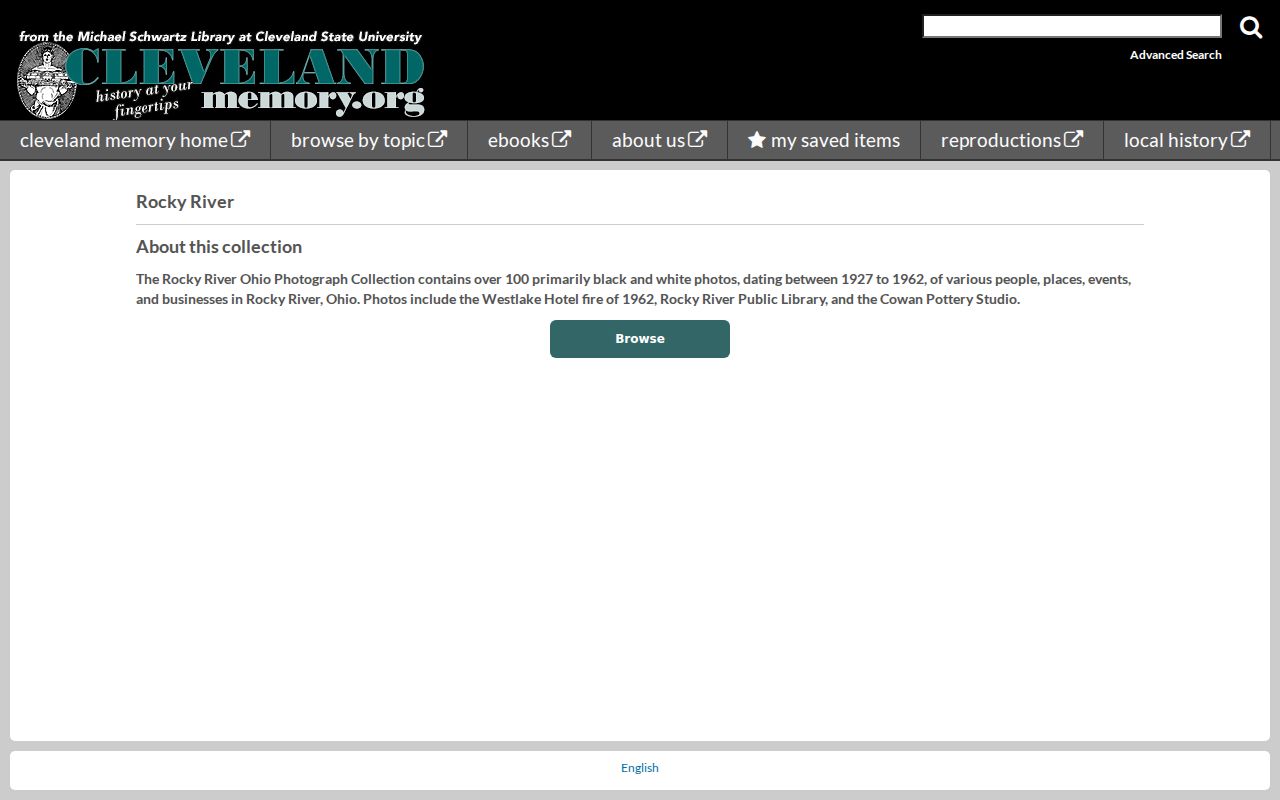
Its descriptive records can provide context for a street, business, or community event, but they do not replace the property and directory evidence needed for a house trail.
Lawful use. Rocky River house-history research is suited to family history, estate questions, and personal curiosity. Do not use an old address trail to track, intimidate, stalk, or harass any living person.